on Saturday, January 19, 2013


Ngai argues that immigration policy is fundamentally about citizenship, who is allowed to become a citizen and who is excluded from citizenship. Citizenship matters because it is citizenship that gives an individual the right to have rights within the State (Ngai, 229). With legal rights the immigrant group can vie for economic and political power within the State.

Once the criteria for citizenship which immigrants must meet (e.g. race, class, occupation, acceptable annual number of immigrants who can be absorbed into the economy) is created, an entire new category of unacceptable immigrants is also created, the excludable, the illegal alien who defies the criteria. Thus while the formal mechanisms of immigration policy stand “triple guard to repel legal immigration”; illegal immigrants swarm in at the back door (e.g. although the number of acceptable legal immigrants to the U.S. in 1953 could be measured in the hundreds of thousands, The New York Times estimated that in 1953 some 1.5 million illegal immigrants entered the United States)(Ngai, 247). The ongoing debate over which immigrants are acceptable and which are excludable is central to the fluctuating power relationships within the country. Ngai traces the transformation of U.S. immigration policy from race superiority to multiculturalism based largely on the shifting power relationships (e.g. the war against Fascism and the need to placate allies, the Cold War and the need to embrace the world role as “leader of the free world”).

Ngai indicates that illegal immigration is the central and singularly intractable problem of immigration policy (Ngai, 265). Ngai intimates why this is so without engaging the issue in sufficient depth. Macro-economic forces create the need for labor. Immigration is encouraged to fill this need. The immigration policy of the State manages the human aspects the importation of cheap labor based on the social norms and needs of the State. (Thus “guest worker” programs or contract labor programs are often acceptable to nativists while legal immigration which implies the ultimate achievement of economic and political rights is not.) Ultimately the entire notion of importing cheap immigrant labor (or for that matter siphoning off the top professionals from emerging economies, the so-called brain drain) supports a pyramid of economic self-interest, what Ngai cites as socio-political selfishness (Ngai, 252). At a micro level, immigration is not about the equitable distribution of the fruits of production, it is about maximizing the economic good of the employer. (Thus the Texas farmer preferred to employ illegal Mexicans rather than legal Mexican “braceros”, because the illegals were cheaper, more docile, and did not require as much “red tape”) (Ngai, 255). At a macro-level immigration policy aims at economic progress to create a “national island of relatively homogenous and comfortable people” (Ngai, 252).

Ngai correctly indicates that immigration policy within nation states is not keeping pace with the fluid trans-national movement of capital and labor, “It may be that illegal immigration will persist as long as the world remains divided into sovereign nation-states and as long as there remains an unequal distribution of wealth among them” (Ngai, 269). It is the economic needs of employers that fuels illegal immigration when legal immigration does not satisfy those needs. The employer acts to optimize his economic utility at the expense of the citizen worker, the illegal alien and the broader society.

My titles on Amazon   My titles at Barnes & Noble


The best reading experience on your Android phone or tablet, iPad, iPhone, Mac, Windows 8 PC or tablet, BlackBerry, or Windows Phone.
on Thursday, January 17, 2013

Antin’s book is a book of personal reminiscence rather than theory, and as such, we must de-construct the work to appreciate what it meant at the turn of the 20 century to become a “typical” American. Antin, a person of rare intelligence, sensitivity and aspirations can hardly be portrayed as typical in any country in any time. Certainly Antin was no more the typical immigrant than Viktor Frankl (author of Man’s Search for Meaning) was the typical Holocaust inmate. She did however, live the life and is able to reveal (sometimes unintentionally) the forces at work in transforming immigrants into Americans.

Antin begins with a portrayal of Jewish life in Tsarist Russia. The environment is one characterized by both external and internal restrictions. The external restrictions began with the geographic confinement of Jews to a certain area, “the Pale” (Antin, 7). Even within this geographic area, Jews were subject to persecution and prejudice, forcing the Jewish population to engage in “humiliating dissimulation” when dealing with officials and Gentiles in general. Jews lived in constant fear of bloody pogroms (often tacitly encouraged by the Government), and were continually required to pay fees to avoid brutalization or to enjoy rights readily available to Gentiles (Antin 10-17). Internal restrictions centered on the rigidity of Jewish religious customs which limited the horizons of people such as Antin’s father (Antin,53). The lot of women was even more restricted since education (which was entirely religious, secular education being effectively denied to Jews) was largely a male prerogative. Even marriages were arranged by families with little input from the bride (Antin,32). Antin compares the lot of women to that of a “treadmill horse” (Antin, 78).

In America, the external restrictions of Russia vanish. Antin notes that in America the immigrant is free to reside, travel and work wherever he pleases (Antin, 160). Above all, education is free, and Antin is free to “fashion my own life” (Antin, 156), as equal under law as any other person and a “fellow citizen” as worthy as the most notable (e.g. George Washington)(Antin, 177). Internal restrictions (immigrant customs) give way too. Antin’s father, who even in Russia was a man aspiring to a new way of life/thinking, permits his wife to pursue Jewish customs so long as orthodoxy does not interfere with American progress (Antin, 195). The collapse of traditional customs as the normative standard for behavior is bewildering to the first generation and leads to a certain disintegration within the family (Antin, 213).

Perhaps a more typical immigrant is Mary Antin’s sister, Frieda, who goes into the workplace and then marries a laborer. According to Mary, Frieda lives “vicariously” and is apt to have been the type of immigrant most influenced by the cinema and mass culture. Similarly, when Mary’s friend, Goldie’s, father tells his daughter “everything is possible in America if you work hard”, and promises to support her educational efforts, the girl responds that after graduating from grammar school she intends to get a job at Jordan Marsh’s big store, earn three dollars a week and have lots of fun with the other girls. This immigrant’s world is being fashioned by consumerism and mass culture.

Mary Antin was intellectual and poetic by nature; reading, writing, and corresponding with the great men of the day and concerned with the poetic, political and metaphysical. Hers was a highly individual path. The more typical immigrant was primarily the consumer of mass culture.

My titles on Amazon     My titles at Barnes & Noble


The best reading experience on your Android phone or tablet, iPad, iPhone, Mac, Windows 8 PC or tablet, BlackBerry, or Windows Phone.
on Sunday, January 13, 2013


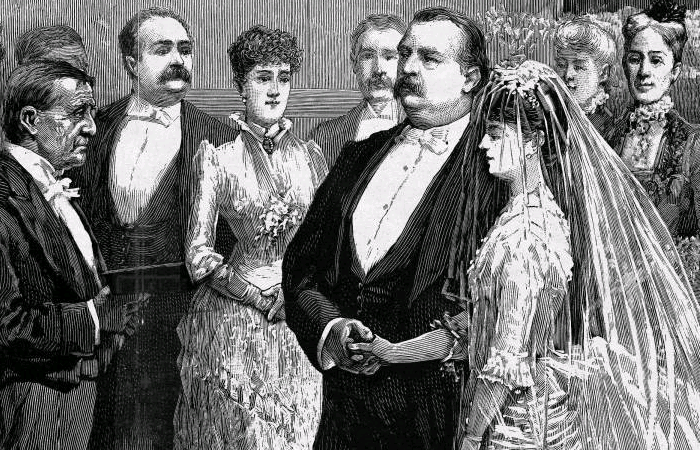
Victorian America had its share of philandering politicians, including Grover Cleveland the 22nd and 24th President of the United States (the only U.S. president to serve two non-consecutive terms 1885-1889 and 1893-1897).

During the election of 1884, Cleveland’s Republican opponents discovered reports that Cleveland had fathered an illegitimate son while he was a lawyer in Buffalo, and chanted “Ma, Ma, where's my Pa?” in derision. Cleveland admitted to paying child support in 1874 to Maria Halpin, for the maintenance of her son Oscar Folsom Cleveland. Maria Halpin had been involved with several men while an intimate of Cleveland’s, including Cleveland's law partner, Oscar Folsom, for whom the child was also named. Grover Cleveland did not know who the father was, but assumed responsibility.

Despite the scandal, Cleveland won the presidential election of 1884. His backers turned the Republican attack phrase, “Ma, Ma, where’s my Pa?” into a victory slogan, “Ma, Ma, where’s my Pa? Gone to the White House Ha! Ha! Ha!”

Two years after the election, the first presidential marriage to occur in the White House united Grover Cleveland (49) and Frances Folsom (22). Frances was the daughter of Cleveland’s old law partner Oscar Folsom. Cleveland was the executor of Oscar Folsom's estate and had supervised Frances' upbringing after her father's death. Cleveland had known Frances from babyhood and had helped to buy her first baby carriage. A regular visitor to the Folsom house, Cleveland had taken Frances toys. When Frances went off to college, her room was kept bright with flowers from “Uncle Cleve.” For his part, Cleveland confided to his sister that he was, “waiting for his wife to grow up.”

The American public was enchanted with the match and the marriage was a success. The Cleveland’s had five children and were happily married for some twenty two years.

My titles on Amazon  

My titles at Barnes & Noble


The best reading experience on your Android phone or tablet, iPad, iPhone, Mac, Windows 8 PC or tablet, BlackBerry, or Windows Phone.
on Friday, November 16, 2012

Elizabeth Van Lew

The White House of the Confederacy

Elizabeth Van Lew of Richmond, although from a good family, was an ardent Unionist who refused to leave town even as the Confederate government took up residence. Her continued devotion to the Union cause was considered just another of the eccentricities of the woman her neighbors came to call “Crazy Bet”. Van Lew began to accentuate her eccentricities. As she walked along the street, she mumbled and hummed to herself, head bent to one side, holding imaginary conversations. Her disguise served her well as she set up a wide reaching spy ring within the Confederate capital, and some say within the Confederate White House itself.


Van Lew began visiting Richmond’s Libby Prison, where Union POWs were imprisoned. As a humanitarian gesture, Van Lew brought food, medicine, and books to the prisoners. She came out with military information. Newly arrived Union prisoners secretly recounted the strength and dispositions of Confederate troops they had seen on their way from the front to Richmond. As the war progressed Van Lew was able to place fellow Union sympathizers within the Confederate War and Navy Departments, and regularly smuggled messages out of Richmond in hollow eggs. General Grant would later say of her efforts, “You have sent me the most valuable information received from Richmond during the war.”

Van Lew’s most daring purported accomplishment remains shrouded in mystery and involved insinuating one of her former servants, Mary Elizabeth Bowser (also known as Mary Jane Richards) into the Confederate White House. Bowser had been a slave of the Van Lew family, but Van Lew freed her and sent her North to be educated many years before the war. When Van Lew established her spy ring she asked Bowser to return and work with her for the Union. Van Lew obtained a position for Bowser as a servant in the Confederate White House through the recommendation of a "friend" who provided supplies to that household. Bowser reported conversations she overheard and the content of documents she was able to read while working in the house. Another Union spy, Thomas McNiven, noted that Bowser had a photographic memory and could report every word of the documents she saw. Stories about Bowser appeared as early as May 1900 in Richmond newspapers. In a 1910 interview with Van Lew’s niece, Bowser was revealed as being part of the spy ring. Jefferson Davis' wife, Varina, publicly denied that a black female spy could have infiltrated the Confederate White House and denied any knowledge of such a person as Mary Elizabeth Bowser. Bowser was inducted into the US Army Intelligence Hall of Fame at Fort Huachuca, Arizona, on 30 June 1995.

When the Union army captured Richmond in April 1865, Van Lew was the first person to raise the U.S. flag in the city. After the war she insisted, “I'm not a Yankee”, maintaining that she was only a good Southerner, holding to an old Virginia tradition of opposition to human bondage.

My titles on Amazon

My titles at Barnes & Noble


The best reading experience on your Android phone or tablet, iPad, iPhone, Mac, Windows 8 PC or tablet, BlackBerry, or Windows Phone.

on Tuesday, November 13, 2012


Fort Sumter fell on April 14, and on April 17 Virginia adopted an “Ordinance of Secession” in the form of a repeal of Virginia’s ratification of the U.S. Constitution, to take effect upon ratification by the vote of the people. This election took place on Thursday, May 23, 1861, and Virginia seceded from the Union.


Before dawn on Friday, May 24, Union troops invaded Virginia, seizing Alexandria and Arlington Heights across from Washington City. On Friday afternoon, miles away at Fox’s Mills, north of Fairfax Court House, seventeen year old Sally Summers was minding the afternoon recess in front of her schoolhouse when she saw a surrey coming down the road from the direction of Alexandria. The driver was her uncle, Amos Fox. As he passed he shouted, “You better dismiss your school right away and go home to your mother. The Union army is advancing!”

Three Virginia militia units (the Rappahannock Cavalry, the Prince William Cavalry, and the Warrenton Rifles) had taken up positions around the strategic village of Fairfax Courthouse. These units were still a part of the "Virginia Army," even though the secession of Virginia was ratified by a popular vote on May 23, 1861. Virginia’s forces were not transferred to the Confederacy until June 6, 1861.

Before dawn on June 1st, Lt. Charles Tompkins, 2nd U.S. Cavalry led a raid on Fairfax Courthouse. After charging through lines of the Virginians twice, the Union cavalry was finally driven off. In the morning, the body of Captain John Quincy Marr of the Warrenton Rifles was discovered. Marr had been hit by a spent round ball. He had a large bruise above his heart but his skin had not been penetrated.

Captain Marr's body arrived in Warrenton that evening and he was buried the next afternoon in the Warrenton Cemetery after a ceremony in the clerk's office yard before a large crowd of mourners. Marr became a Southern martyr.

Charles Henry Tompkins received the Congressional Medal of Honor for his actions at Fairfax Court House. His was the first action of a Union Army officer in the American Civil War for which a Congressional Medal of Honor was awarded, although it was not awarded until 1893. His citation reads: "Twice charged through the enemy's lines and, taking a carbine from an enlisted man, shot the enemy's captain."

My titles on Amazon

My titles at Barnes & Noble


The best reading experience on your Android phone or tablet, iPad, iPhone, Mac, Windows 8 PC or tablet, BlackBerry, or Windows Phone.


on Tuesday, November 6, 2012

No single individual did more to create the Hollywood cult of celebrity than theatrical genius Sid Grauman.  As a youth, Grauman worked in the ramshackle towns of the Alaska Gold Rush as a paperboy.  Newspapers were scarce and expensive, costing up to one dollar each.  Grauman met a store owner who purchased one of his newspapers for $50. The store owner then charged admission to local miners to whom he read the paper aloud in his store. Grauman learned that people would pay handsomely to be entertained.

Grauman built a series of theaters that would define the “movie palace” of Hollywood’s Golden Era.  The Egyptian theater, built in 1922, was the setting for the first-ever Hollywood premiere, Robin Hood, starring Douglas Fairbanks, on Wednesday, October 18, 1922.  The exterior and interior walls of the theater contained Egyptian-style paintings and hieroglyphics. The four massive columns that mark the theatre's main entrance are 4+12 feet wide and rise to a height of  20 feet, the large courtyard in the front, complete with a fountain and palm trees, was specifically designed to host the theater’s famous red carpet ceremonies.


 Grauman built an even more magnificent theater in 1927 further up Hollywood Boulevard, the Chinese Theater. The Chinese Theater was modeled on a Mandarin palace. Not satisfied with the fusion of opulence and stardom, Grauman imbued the Chinese Theater with a mystic aura for millions of movie fans: it was Grauman’s brainchild to invite movie stars to place their hands and feet in the wet cement of the theater’s patio. The dried imprints became like holy relics to movie fans, the imprints also allowed fans to measure their own hands and feet against these relics of their saints.


The hand and feet prints of Marilyn Monroe are said to be the most popular relics.

My titles on Amazon

My titles at Barnes & Noble


The best reading experience on your Android phone or tablet, iPad, iPhone, Mac, Windows 8 PC or tablet, BlackBerry, or Windows Phone.
on Sunday, September 2, 2012


Midnight Rising: John Brown and the Raid That Sparked the Civil War

By Tony Horowitz

A well written and informative book, but one which romanticizes and glorifies terrorism, for that was what John Brown was by the standards of his own day and by the standards of our own.

Brown, a religious fanatic, with a family history of mental illness, whom Horowitz acknowledges many of his close associates thought exhibited signs of insanity, saw himself as God’s instrument on earth. Brown was pledged to violence and declared, “The sins of this country can only be purged with blood.” Wherever Horowitz uses the word “insurgent” substitute “jihadist” and try to conjure up the same sympathy for Brown that Horowitz’s use of the milder term allows.

There is little to admire in Brown’s bloody career, which ranged from hacking five unarmed men to death in Kansas in 1856 to killing unarmed civilians at Harper’s Ferry in 1859 and trying to incite widespread murder and mayhem. Brown was disavowed in his own day by most in the North, including the Republican candidate for President, Abraham Lincoln. Despite Brown’s condemnation by the moderate elements of his own day, Horowitz, embraces the position of the most polarized abolitionists of 1859 in somehow seeing Brown as having performed a service to the nation by providing the “spark that caused the civil war.” The supposition being that only a bloody civil war that resulted in 600,000 deaths (as a percentage of population this would equate to some six million Americans today) could result in the abolition of slavery.

This supposition is wrong however. Another American slave society abolished slavery without firing a shot. The other great slave society of the late 19th century was Brazil. The Brazilian economy depended on slaves especially in mining, cotton production, and sugar cane production. More slaves were imported into Brazil over the course of three centuries than were imported into North America. By the late 19th century slavery was in decline. Slaveowners preferred to pay free immigrant labor from Europe low wages than to keep supporting entire slave communities from cradle to grave, since a significant portion of those communities (the sick, disabled, very young, and very old) were non-productive. By 1871, the sons of all existing slaves were freed. In 1885, all slaves aged over 60 years were freed. Slavery was legally ended nationwide on May 13, 1888, with the government compensating slaveowners for each slave freed. A mere twenty three years after the bloody American Civil War Brazil ended slavery peacefully, perhaps because it did not have fanatics like John Brown to foment fear and violence.

My titles on Amazon

My titles at Barnes & Noble


The best reading experience on your Android phone or tablet, iPad, iPhone, Mac, Windows 8 PC or tablet, BlackBerry, or Windows Phone.